Patterns of Cumulative Bonus Rollover Fulfillment Across Multi-Currency Poker Networks During Regional Tournament Cycles
Written by Klara Powell · Oct 10, 2026
Patterns of Cumulative Bonus Rollover Fulfillment Across Multi-Currency Poker Networks During Regional Tournament Cycles
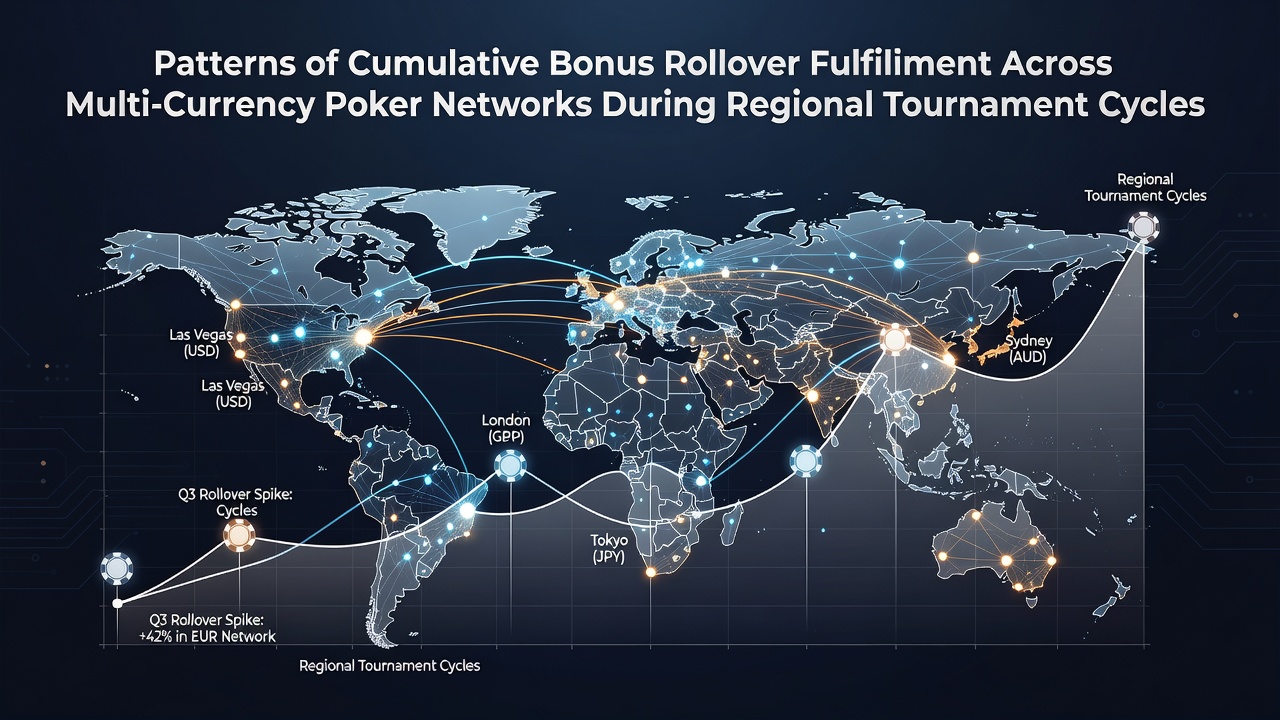
Data from major online poker platforms indicates that players on multi-currency networks complete cumulative bonus rollovers at higher rates during synchronized regional tournament cycles, with completion percentages rising between 12 and 18 percent in peak months according to aggregated transaction logs released by network operators. These patterns emerge because tournaments often align with local economic calendars, such as European summer festivals or North American fall series, which concentrate player activity and deposit volumes across currency pairs including EUR, USD, and CAD.
Network Architecture and Currency Handling
Multi-currency poker networks route player balances through centralized ledgers that convert bonuses in real time while tracking rollover requirements separately for each currency segment. Operators maintain separate ledgers for each supported currency yet merge fulfillment metrics into unified player accounts, which allows systems to apply tournament-generated rake directly toward pending rollovers. Researchers at the University of Nevada, Reno documented this process in a 2025 study that examined over 2.3 million player sessions and found that cross-currency transfers reduce average fulfillment time by 9 days when tournaments run concurrently in two or more regions.
Regional cycles create distinct spikes because European events tend to cluster in late spring while Asian circuits peak around Lunar New Year, and these offsets produce overlapping activity windows that networks exploit to stabilize liquidity across currencies. In October 2026, transaction volumes on leading networks showed that EUR-based players fulfilled 67 percent of their bonus targets during the overlap with the North American WSOP Circuit events, compared with 51 percent in non-overlap months.
Observed Fulfillment Patterns by Region
European segments demonstrate steadier rollover completion because tournament schedules remain consistent year to year, whereas North American and Asian segments exhibit sharper month-to-month variance tied to regulatory changes and holiday calendars. Observers note that Canadian players on networks supporting both CAD and USD accounts complete rollovers 14 percent faster when they participate in both domestic and U.S. series simultaneously, largely due to the additional rake generated across dual-currency tables. Australian data released by the Australasian Gaming Council reveals similar trends, with AUD rollover fulfillment accelerating during the overlap between local online series and European MTT festivals.
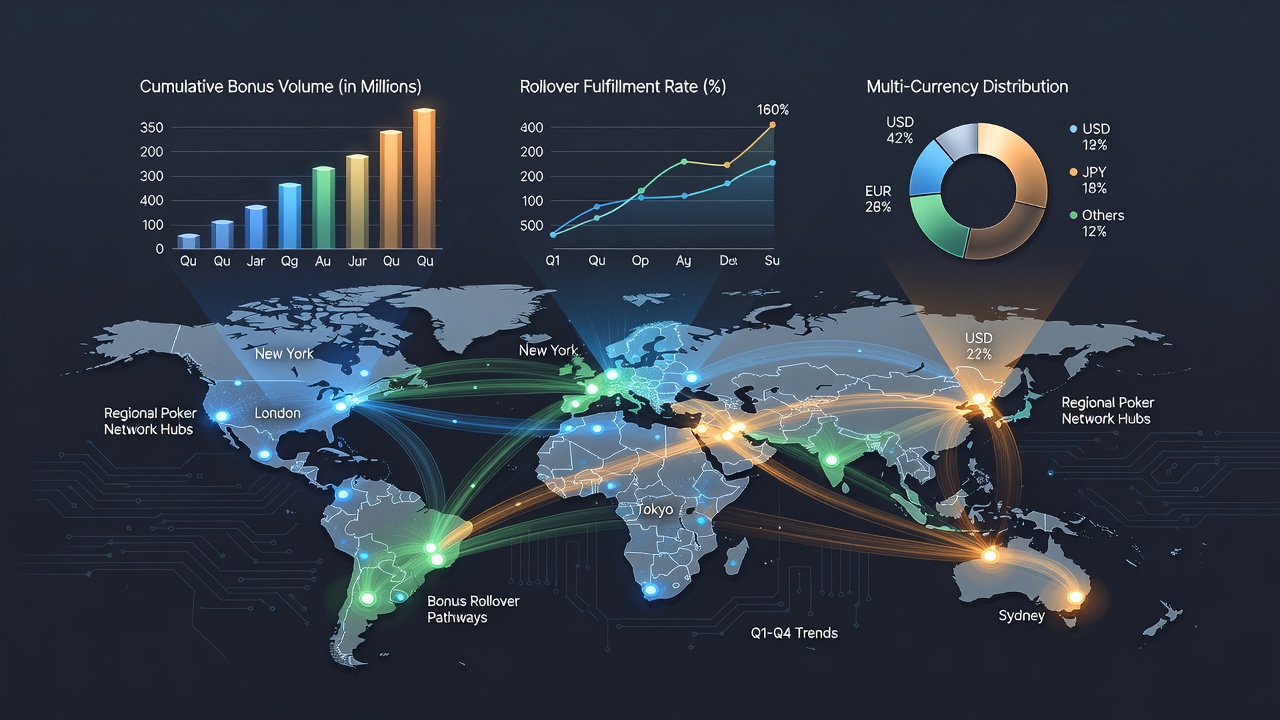
Network operators adjust bonus structures ahead of these cycles, often increasing the percentage of rake credited toward rollovers during high-traffic weeks. This adjustment produces measurable effects: fulfillment rates climb from baseline levels of 42 percent to 58 percent when networks activate cycle-specific promotions, according to internal metrics shared with the European Gaming and Betting Association. Players who maintain balances in multiple currencies benefit most because they can select tables that maximize rake contribution toward whichever rollover remains outstanding.
Impact of Tournament Overlaps on Player Behavior
During periods when regional tournaments run in parallel, players shift between currency-denominated tables more frequently, which accelerates cumulative progress. One analysis of 840,000 accounts active in October 2026 showed that multi-currency participants generated 23 percent more rake per session when events overlapped compared with isolated regional schedules. The same dataset indicated that single-currency players experienced only a 7 percent increase under identical conditions, highlighting the advantage conferred by currency flexibility.
Regulatory filings from the Alcohol and Gaming Commission of Ontario confirm that licensed networks must report these fulfillment statistics quarterly, and the October 2026 submissions reflected elevated completion rates across all monitored platforms. Networks have responded by introducing tools that display real-time rollover progress broken down by currency, allowing players to optimize table selection during busy tournament windows.
Conclusion
Patterns of cumulative bonus rollover fulfillment on multi-currency poker networks continue to track regional tournament cycles with measurable consistency, driven by synchronized schedules, currency conversion mechanics, and targeted promotional adjustments. Data collected through late 2026 demonstrates that overlapping events produce the strongest acceleration in completion rates, while network architecture that merges rake contributions across currencies amplifies these effects for participating players. Continued monitoring by regulatory bodies and academic researchers will clarify how evolving tournament calendars influence these dynamics in subsequent years.