Player Input Timing Sequences and Their Relation to Outcome Distributions in Regulated Multi-Game Digital Environments
Written by Klara Powell · Sep 26, 2026
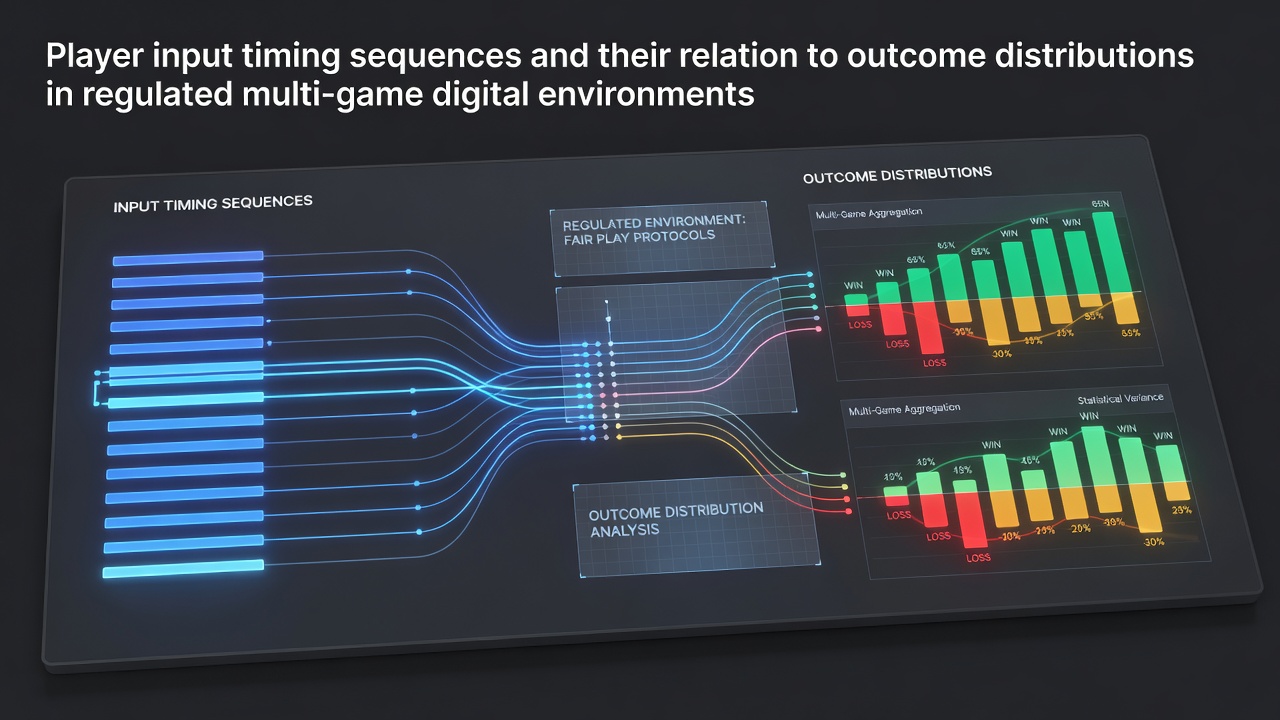
Player Input Timing Sequences and Their Relation to Outcome Distributions in Regulated Multi-Game Digital Environments
Player input timing sequences refer to the precise intervals between user actions such as button presses, bet placements, and decision confirmations in digital gaming platforms. These sequences interact with random number generators and server-side processes to shape how outcomes distribute across sessions. In regulated multi-game environments, operators log these timings as part of compliance requirements that track fairness and detect anomalies.
Core Mechanisms of Input Timing in Digital Systems
Digital platforms record every millisecond between inputs because timing data feeds into algorithms that seed or validate random outcomes. Research from university laboratories shows that clustered inputs within narrow windows can correlate with specific distribution patterns when systems synchronize multiple game instances on shared servers. Observers note that platforms often stagger game rounds across different titles to prevent any single timing sequence from dominating result pools.
Regulated operators maintain audit trails that capture these sequences alongside outcome logs. Data from state-level gaming authorities in teh United States reveal that timing records help verify whether distribution curves remain within expected statistical bounds during extended play periods. When multiple games run simultaneously, input cadence from one title can indirectly influence resource allocation on backend processors that handle several environments at once.
Regulatory Standards Across Jurisdictions
Regulatory bodies in Nevada and New Jersey require operators to preserve timing data for a minimum of five years so that independent testing labs can reconstruct sessions. Figures released by the Nevada Gaming Control Board in September 2026 documented how timing variance metrics help confirm that outcome distributions align with certified random number generator specifications. Similar frameworks in Australian states mandate that multi-game platforms isolate timing sequences per user to avoid cross-contamination between different titles.
Industry reports from the American Gaming Association indicate that standardized logging protocols emerged after 2024 to address synchronization issues in hybrid table and slot ecosystems. These protocols require timestamps accurate to the millisecond so that analysts can map sequences against outcome frequencies without ambiguity.
Analytical Approaches to Sequence and Distribution Mapping
Analysts apply statistical models to timing sequences to determine whether patterns deviate from baseline distributions. One study conducted at a European research institution examined thousands of sessions and found that inputs spaced at irregular intervals produced outcome spreads consistent with certified randomness parameters. Platforms use these models to flag sequences that repeat at rates exceeding normal variance thresholds.

Multi-game environments present additional complexity because players often switch between titles within the same session. Timing data collected across switches allows operators to verify that each game maintains independent distribution integrity. Experts have observed that cross-game timing correlations rarely affect final results when proper isolation protocols remain active.
Practical Implementation in Live Operations
Operators integrate timing sequence monitoring into real-time dashboards that display aggregate distribution metrics. When September 2026 updates to compliance software rolled out in several North American jurisdictions, platforms gained enhanced tools for correlating input cadences with payout frequency reports. These tools help confirm that no timing sequence systematically alters expected return percentages across the catalog of available games.
Testing laboratories conduct periodic reviews by replaying recorded sequences against original random number generator outputs. Results from these reviews show that properly regulated systems maintain distribution stability regardless of input speed variations introduced by different player behaviors.
Conclusion
Player input timing sequences serve as essential data points in regulated multi-game digital environments because they support verification of outcome distribution integrity. Regulatory requirements across multiple jurisdictions ensure that operators preserve and analyze these sequences to meet fairness standards. Continued refinement of logging and analytical methods supports ongoing compliance as platforms expand their multi-game offerings.